As AI Search Reshapes Discovery, Marketers Look Beyond Rankings to Measure Real Visibility
Oct 07, 2026
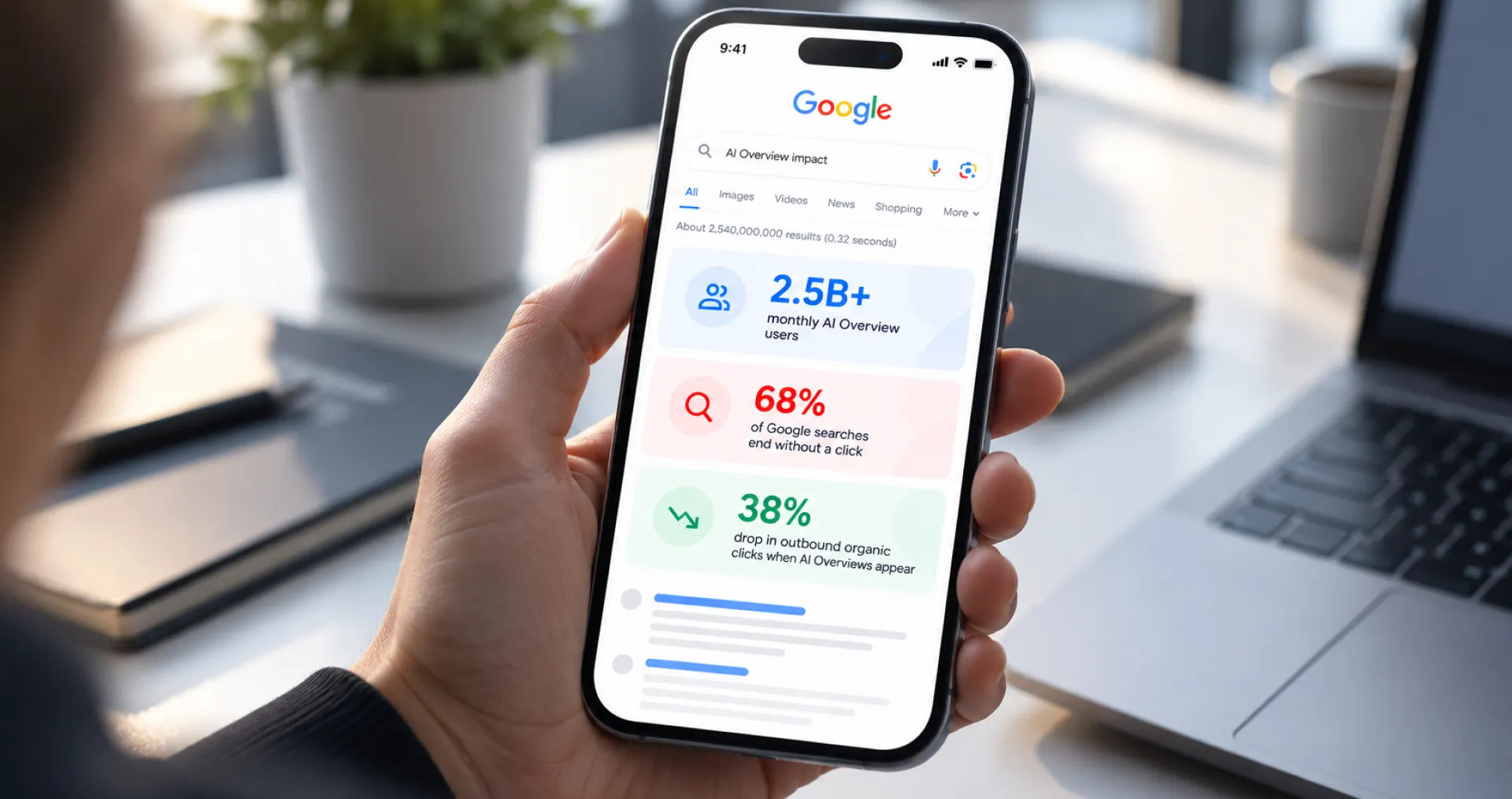
AI-generated answers are changing how people research brands before visiting a website. For marketers, visibility now includes whether an answer mentions the brand, recommends it, describes it accurately, and relies on sources the business can stand behind. Verndale introduced two related services to help measure AI visibility and build the content operations needed to improve it.
Research from SparkToro, based on Similarweb clickstream data from January through April 2026, found that 68% of US Google searches ended without a click. Gartner also reported that 45% of surveyed B2B buyers used generative AI during a recent purchase, primarily to gather information about vendors and products.
SEO remains essential, but marketers now interpret visibility more broadly. Rankings and traffic show whether people can find a page. AI visibility also asks whether a brand becomes part of the answer and whether the answer is correct.
“A brand can have strong search rankings and still be missing from the questions that shape consideration,” said Tod Szewczyk, Managing Director of Marketing Services at Verndale. “Brands need to know where they are being named, when they are being recommended, which sources are influencing the answer, and where inaccurate information is taking hold.”
Google’s guidance says established SEO practices remain relevant to AI Overviews and AI Mode. Answer Engine Optimization (AEO) and Generative Engine Optimization (GEO) build on that foundation by examining how brands appear across AI responses and which content, authority, or source gaps may be limiting discovery.
To answer those questions, Verndale evaluates AI visibility by repeatedly testing real audience questions across major AI assistants. The analysis measures whether a brand is named, recommended, and cited, identifies the sources that shape each answer, surfaces questions where competitors appear instead, and flags claims that conflict with confirmed facts. This produces a practical content brief rather than a single visibility score.
That approach can surface both category leadership and hidden vulnerabilities. In a recent study for a leading US graduate school, Verndale collected over 7,200 AI answers to more than 100 questions across ChatGPT, Gemini, Google AI Overviews, Google AI Mode, Perplexity, and Claude. The study evaluated prospective graduate students separately from buyers of professional learning because each audience asked different questions and encountered a different competitive set.
Across questions about graduate degree programs, the institution earned 16% of tracked provider mentions, the largest share among 18 institutions, and its official website accounted for 13% of citations, more than any other domain. Those strong overall results still contained meaningful gaps: in 21 combinations of a question and an AI assistant, at least two competitors appeared, but the institution never did. The study also found 284 answers that conflicted with a current program fact confirmed by the client.
The findings show why overall visibility can hide specific risks. A brand may lead its category while remaining absent from important questions, receiving few recommendations, or being described with outdated information. The most useful analysis connects each gap to the exact audience question, cited source, and fact that needs attention.
Verndale’s complimentary SEO, GEO, and AEO assessment helps organizations establish that baseline across search and AI results. It examines technical health, content coverage, competitive visibility, citations, answer accuracy, and the authority signals influencing discovery, so teams can see where visibility is strong and where it needs work.
Correcting the findings requires more than a list of page edits. Teams need clear ownership, reusable content models, reliable source material, and a way to keep information current across channels to translate the work into lasting visibility gains.
Verndale’s AI-Ready Content Supply Chain offering addresses those operating needs so teams can scale consistently. Its Content Supply Chain and Agentic AI Services connect planning, content creation, review, localization, distribution, and measurement. AI agents support repeatable preparation, quality checks, and reporting, while marketing and subject-matter experts retain strategy and final approval.
A recent Verndale engagement with Quinnipiac University illustrates the operational side of the work. Governed agent workflows turned existing stories into reusable content blocks while marketers retained final approval. Quinnipiac increased article optimization coverage from 0% to 90% while also reporting a 33% improvement in content recall and a 25% improvement in AI readiness.
“AI visibility creates a new demand signal for content teams,” Szewczyk said. “The organizations that act on it will connect what audiences are asking with the content, governance, and workflows required to answer accurately.”
About Verndale
Verndale is a digital experience agency that helps brands create, optimize, and grow through strategy, design, content, data, AI, and technology. The company works with marketing and technology teams to build discoverable, measurable, and human-centered digital experiences.