How Quinnipiac University Uses AI Agents to Extract More Value from Existing Content
Quinnipiac University


The Challenge
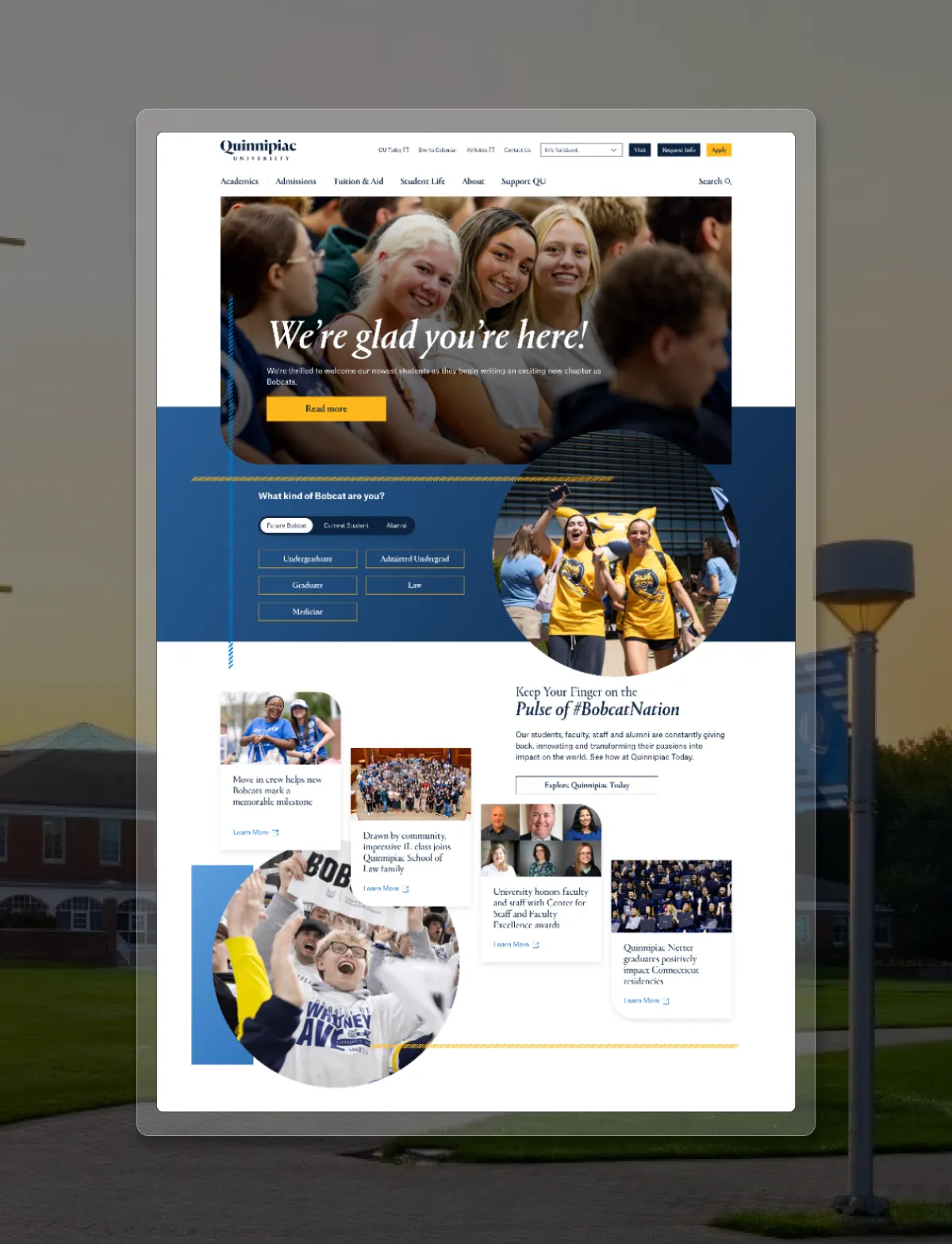
Quinnipiac University's marketing team has no shortage of compelling content published on 8,800+ pages across 17 Optimizely websites. Faculty were featured in national media, news articles included strong student and alumni testimonials, and newsletters regularly drew from university activity.
The challenge was making that content easier to find and reuse for humans and machines. Valuable information often remained buried in the original article or required manual effort to turn into another experience. The team saw an opportunity to use AI, not for editorial judgment or creativity, but to help activate content that already existed and multiply its impact.
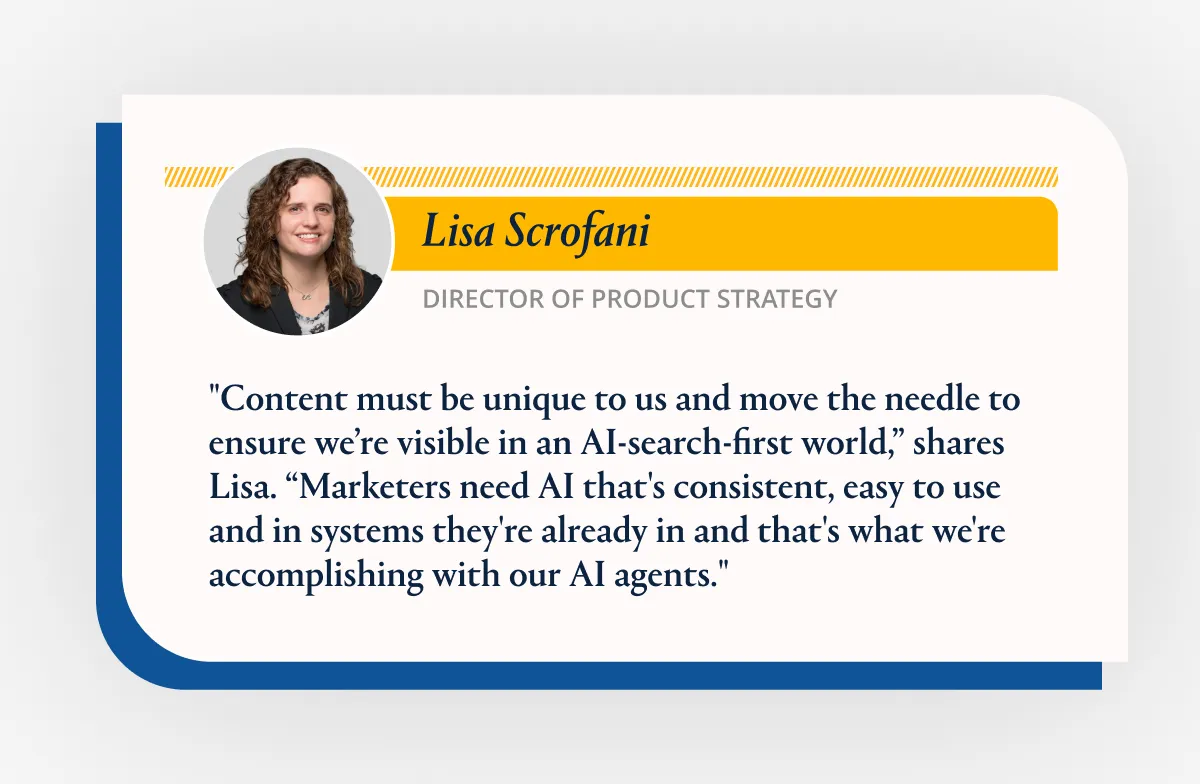
Quinnipiac's Director of Product Strategy, Lisa Scrofani, new that Optimizely Agentic Platform, Mark, formerly known as Opal, gave her team the opportunity to revisit old problems and new ones that simply weren't possible before. She knew she wanted to do more than just save time for her team and saw an opportunity much greater than that.
The Solution
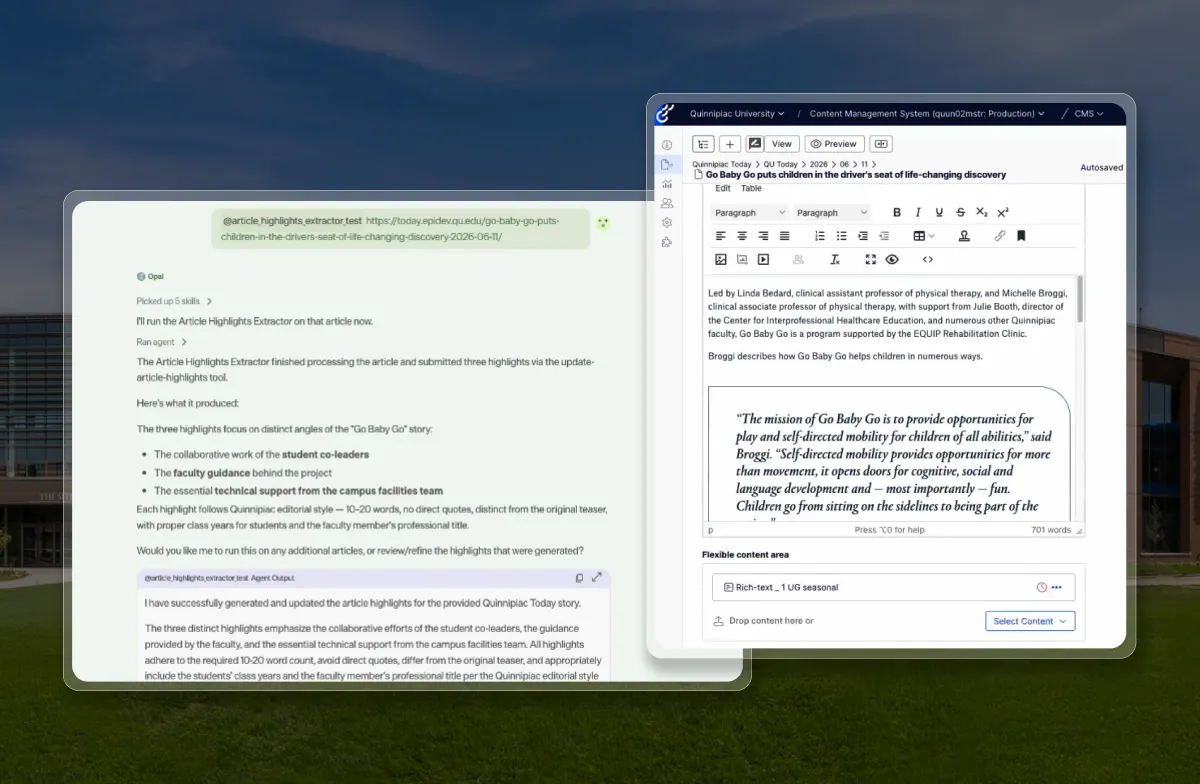
Quinnipiac and Verndale focused on four use cases that could be addressed by Optimizely agents:
- Newsletter TL;DRs: Creating concise summaries from long-form stories
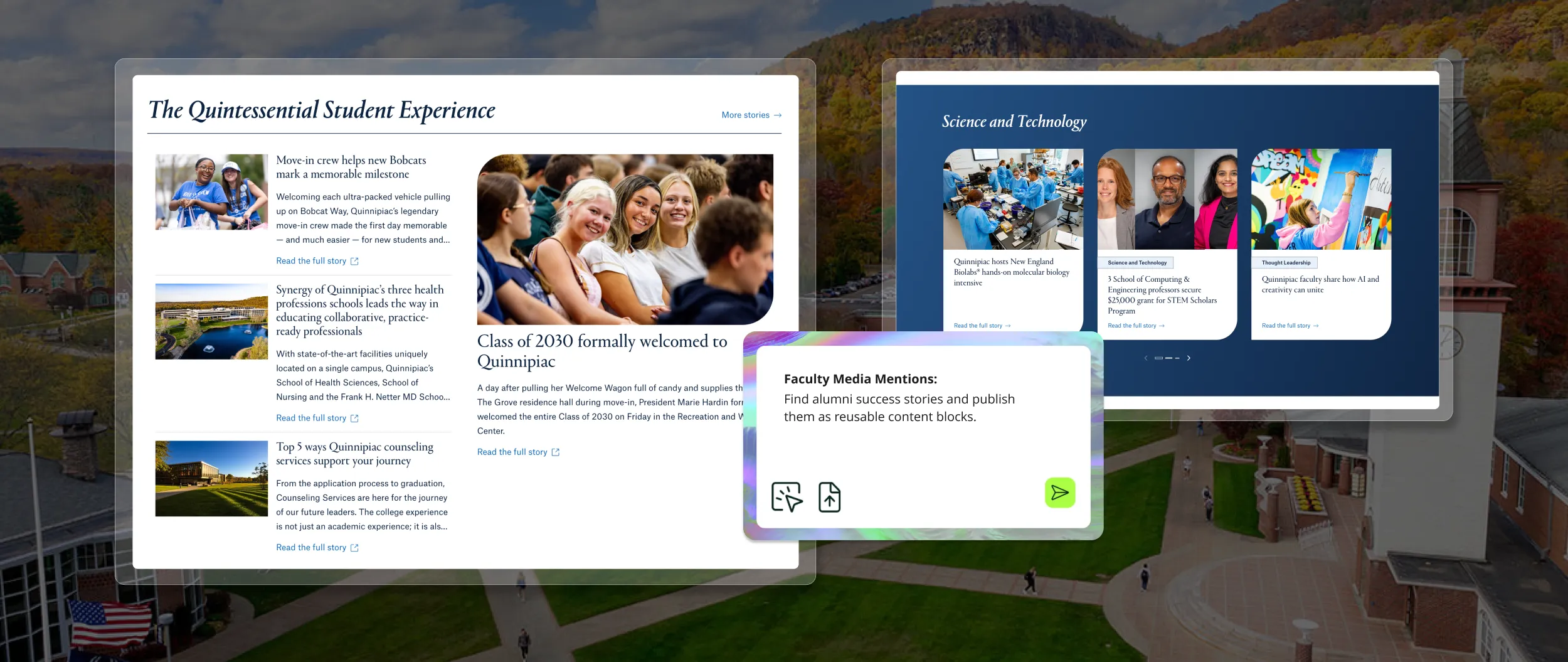
- Faculty media mentions: Extracting quotes and media appearances to create reusable credibility blocks
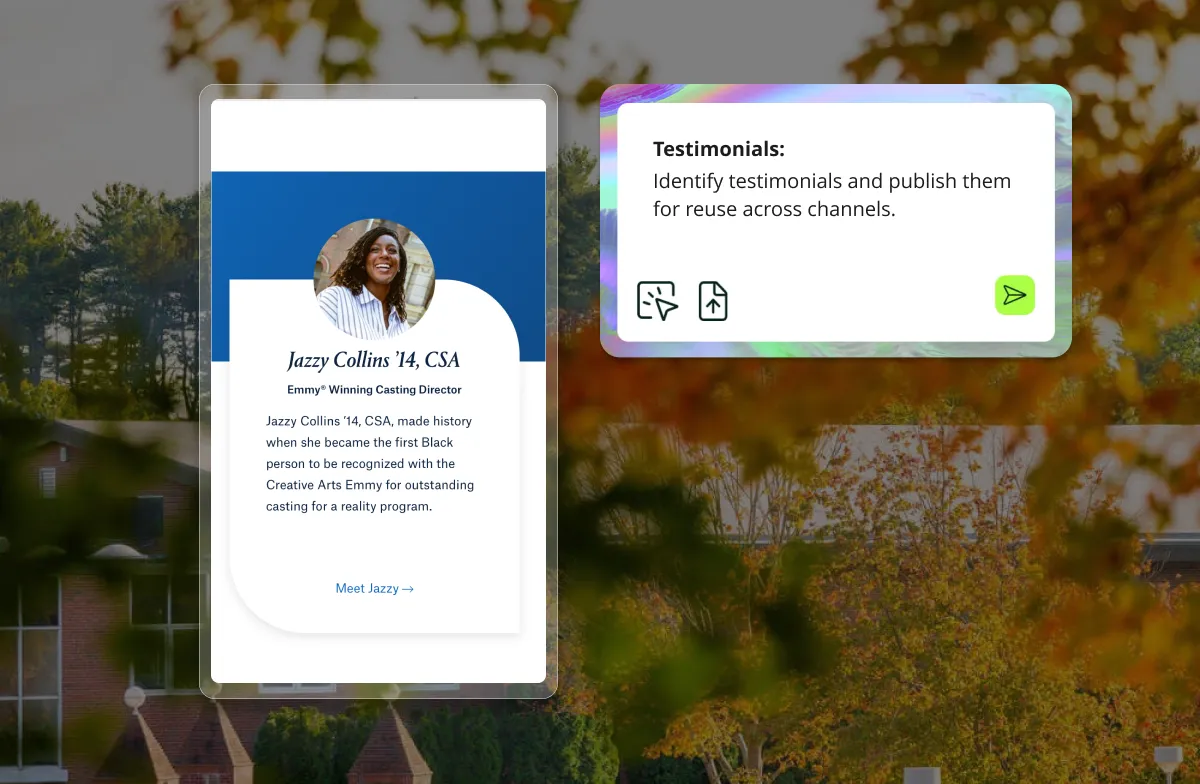
- Testimonial spotlights: Surfacing testimonials from news articles and publishing them as reusable content blocks
- Richer photo galleries: Adding more useful context to visual content
To accomplish this, the workflow needed to keep people responsible for strategy, messaging, governance, and final approval. Therefore, Opal handled the repeatable work of finding, organizing, and preparing content for reuse. To get there, Verndale designed a governed workflow that connected Opal with the university's existing content operation.
Once content is published in Optimizely CMS, Opal identifies the information by using predefined rules and creates structured content outputs. From there, marketers review and approve the outputs to be published back into the CMS, where the original story can support multiple digital experiences.
The Outcome
Quinnipiac and Verndale built upon valuable expertise, stories, and testimonials to deliver a scalable agentic content lifecycle that drives AI discovery and human engagement.
The biggest shift was optimization coverage. With Mark handling the repeatable work and marketers reviewing the outputs, Quinnipiac moved from 0% to 90% optimization coverage across its articles. It created ROI from work that previously never reached the backlog, while giving 150+ CMS editors a more reliable way to maintain quality. Additionally, the team generated 91 minutes of compounded, increased productivity per week by using agents to transform published content into reusable content blocks.
For website visitors, easier-to-consume summaries and proof points contributed to a 33% improvement in content recall, making it easier to discover the people, expertise, and experiences behind the university. More structured information and stronger authority signals also contributed to a 25% improvement in AI readiness.
For Quinnipiac, the value of agentic content was making optimization possible at a scale and with a level of consistency that manual processes couldn't support before.
Optimization on Content Articles
Improvement in Content Messaging Retention
Improvement in Content's AI Readiness
How we get it done
Capabilities
Technologies
Get in Touch

Allen Schweitzer
Chef de la direction des revenus
Success Stories

Work AI Built on Glean
Stratégie

University of Redlands
Optimizely